
When men talk about “performance,” the focus is usually on duration. However, for a significant portion of the population, the clock runs a little faster than desired. If you’ve ever felt like you’re finishing before the race has even truly begun, you aren’t alone. Understanding the different types of premature ejaculation is the first step toward reclaiming control, confidence, and intimacy.
In the world of sexual health, “PE” isn’t a one-size-fits-all diagnosis. Different men experience different symptoms for various reasons. As an expert in men’s health, I’m here to break down these categories so you can identify exactly where you stand and how to fix it.
Why Understanding the Types of Premature Ejaculation Matters
For decades, early climax was treated as a purely psychological issue—”performance anxiety.” While the mind plays a massive role, modern science has evolved. We now know that the types of premature ejaculation can be categorized based on their onset, frequency, and biological triggers.
By identifying which version you are dealing with, you can stop wasting time on generic “hacks” and start using targeted solutions. Whether it’s a lifelong condition or something that started recently, there is a path forward.
1. Lifelong (Primary) Premature Ejaculation
The first of the types of premature ejaculation is known as Lifelong or Primary PE. As the name suggests, this is a condition that has been present since a man’s first sexual encounter.
The Characteristics of Lifelong PE
Men with this specific entry in the types of premature ejaculation list usually experience climax within 60 to 90 seconds of penetration. It is consistent, occurring in nearly every sexual encounter, regardless of the partner or the environment.
The Science Behind the Type
Researchers believe that this version of the types of premature ejaculation is often linked to neurobiology rather than just “nerves.” Specifically, it may involve the levels of serotonin in the brain. Serotonin is a neurotransmitter that helps delay the ejaculation reflex; lower levels or lower sensitivity to serotonin can result in a shorter “latency time.”
2. Acquired (Secondary) Premature Ejaculation
The second category among the types of premature ejaculation is Acquired or Secondary PE. This is a “new” problem for a man who previously had a satisfying level of control.
Why Does This Happen?
Unlike lifelong issues, acquired types of premature ejaculation are usually triggered by external factors. These can include:
- Erectile Dysfunction (ED): Often, men who struggle to maintain an erection will subconsciously rush to finish before they lose their firmness.
- Relationship Stress: Conflict with a partner can create an environment of anxiety that leads to PE.
- Health Conditions: Thyroid issues or prostate inflammation (prostatitis) are common biological culprits for these types of premature ejaculation.
The Psychology of Change
Because this is one of the types of premature ejaculation that “shows up” later in life, it can be particularly damaging to a man’s ego. The good news? Because it was acquired, it can usually be reversed by treating the underlying cause.
3. Natural Variable Premature Ejaculation
It is vital to understand that not all types of premature ejaculation are chronic medical conditions. Natural Variable PE is characterized by occasional, inconsistent episodes of early climax.
The “Normal” Experience
Most men will experience this specific entry in the types of premature ejaculation list at some point in their lives. It might happen because you haven’t had sex in a long time, because you are particularly excited with a new partner, or because you are overly tired.
Is it a Problem?
In the context of the 4 types of premature ejaculation, this one is considered a normal variation of human sexual response. It doesn’t require medical intervention so much as it requires communication and perhaps a bit of “practice.”
4. Subjective Premature Ejaculation
Perhaps the most complex of the types of premature ejaculation is Subjective (or Sensory) PE. This is a situation where a man’s actual time to ejaculation is within the normal range (usually 3 to 7 minutes or more), but he feels as though it is too fast.
The Power of Perception
Men who fall into this category of the types of premature ejaculation are often influenced by external pressures. This could be:
- The “Porn” Effect: Comparing real-life performance to the unrealistic, edited standards of adult films.
- Partner Expectations: Feeling like they aren’t satisfying their partner, even if the partner is perfectly happy.
- Cultural Myths: The belief that “real men” should last 30 minutes.
Treating these types of premature ejaculation involves more “head work” than “body work.” Cognitive Behavioral Therapy (CBT) and sex therapy are highly effective here.
Diagnosing Your Condition
If you are trying to figure out which of the types of premature ejaculation you have, ask yourself these three questions:
- When did it start? (First time ever = Lifelong; Recently = Acquired)
- How often does it happen? (Every time = Lifelong/Acquired; Sometimes = Natural Variable)
- What is the actual duration? (Under 1 minute = Lifelong; Normal time but feels short = Subjective)
Understanding the types of premature ejaculation is the only way to choose the right treatment. For example, a man with Lifelong PE might benefit from SSRIs (Selective Serotonin Reuptake Inhibitors), whereas a man with Acquired PE might need to focus on his cardiovascular health or prostate.
Habits That Worsen Performance
Regardless of which of the types of premature ejaculation you are struggling with, certain lifestyle habits act like gasoline on a fire.
Stress and High Cortisol
As we discussed in the LinkedIn post, stress is a performance killer. When your cortisol is high, your body is in a state of tension. Tension is the enemy of control. All types of premature ejaculation are exacerbated when your nervous system is on edge.
The Sedentary Desk Life
Poor blood flow affects the pelvic floor. A weak pelvic floor makes it much harder to “clench” and delay the climax. If you want to combat any of the types of premature ejaculation, you must incorporate Kegel exercises and general lower-body movement.
Poor Communication
The “shame cycle” is common in all types of premature ejaculation. By not talking about it with a partner, you increase the pressure, which increases the anxiety, which—you guessed it—makes you finish faster next time.
Solutions for the 4 Types of Premature Ejaculation
Medical Interventions
For Lifelong and Acquired types of premature ejaculation, consider:
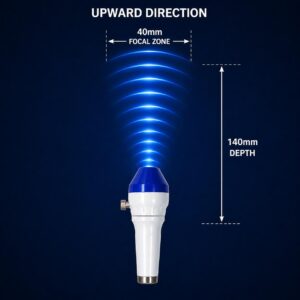
- Low Intensity Extracorporeal Shockwave Therapy (Li-ESWT): A non-invasive medical procedure that uses low-intensity sound waves.
Clinical study:
Behavioral Techniques
For Natural Variable and Subjective types of premature ejaculation, consider:
- The Squeeze Technique: Pausing and applying pressure to the head of the penis to “reset” the urge.
- The Stop-Start Method: Learning to recognize the “point of no return” and backing off before you hit it.
Conclusion: Reclaiming Your Performance
Identifying the types of premature ejaculation isn’t about labeling yourself; it’s about empowering yourself. Whether you are dealing with Lifelong, Acquired, Natural Variable, or Subjective PE, there is a solution available.
The first step is moving past the stigma. By understanding the types of premature ejaculation, you move from a place of frustration to a place of action. You are not “broken”—you simply have a biological or psychological pattern that needs a slight recalibration.Diagnosing Your ConditionHabits That Worsen Performance