For men living with the physical and psychological burden of Peyronie’s Disease, finding a treatment that is both effective and non-invasive can be a challenge. While surgery was once the standard answer, regenerative medicine has introduced a game-changer: Li-SWT for PD.
In this post, we’ll explore how Low-Intensity Shockwave Therapy is transforming the treatment landscape, why the technology behind it matters, and why the Medispec ED1000 is the clinical leader in this field.
1. Understanding the Challenge of Peyronie’s Disease
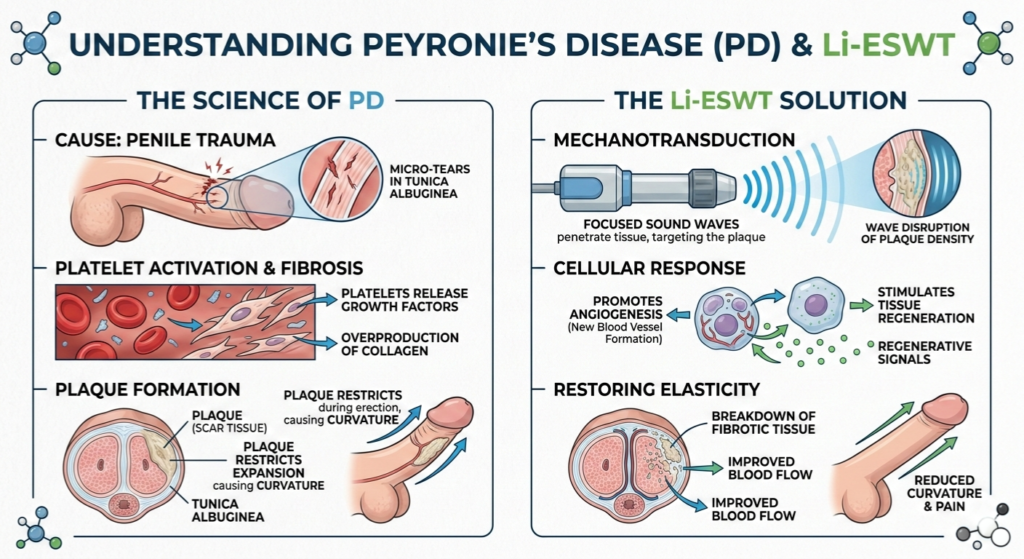
Peyronie’s Disease (PD) involves the development of fibrous scar tissue, known as plaque, inside the penis. This plaque is inelastic, meaning it doesn’t stretch during an erection, which leads to:
- Curvature: A noticeable bend that can make intercourse difficult or impossible.
- Pain: Acute discomfort during erections.
- Indentation: A “bottleneck” or “hourglass” appearance of the shaft.
Traditional treatments often involve painful injections or invasive surgery that risks permanent shortening of the penis. This is why Li-SWT for PD has become such a sought-after alternative.
2. How Li-SWT for PD Works at a Cellular Level
Low-Intensity Shockwave Therapy (Li-SWT) doesn’t just mask symptoms; it targets the underlying plaque. When the acoustic waves are applied to the affected area, they perform three critical functions:
- Plaque Fragmentation: The mechanical energy helps soften and break down the dense, calcified fibers of the plaque.
- Anti-Inflammatory Response: The therapy reduces the inflammation that causes pain during the “active phase” of the disease.
- Tissue Regeneration: It stimulates the growth of new blood vessels and healthy tissue, improving the elasticity of the tunica albuginea.
3. The Medispec ED1000 Advantage
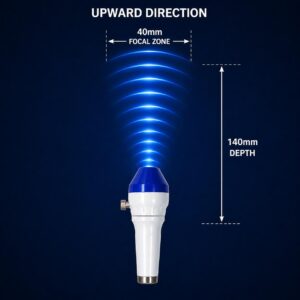
When researching Li-SWT for PD, you will encounter many different devices. However, the Medispec ED1000 stands out because it utilizes Electrohydraulic technology.
Unlike “radial” devices that produce mere pressure waves, the ED1000 creates a “True Shockwave.” This is crucial for PD because:
- Depth: It penetrates deep into the tissue to reach the plaque.
- Focus: It delivers a focused “shock” that triggers a biological response without damaging the surrounding skin.
- Focal Zone: It has a larger focal zone than many competitors, ensuring the entire plaque area is treated uniformly.
4. What the Clinical Research Says
The use of Li-SWT for PD is backed by significant clinical evidence. Specifically, studies involving the Medispec technology have shown remarkable results in the “Visual Analogue Scale” (VAS) for pain.
Clinical data highlights that:
- Pain Reduction: Most patients experience a significant drop in pain after just a few sessions.
- Curvature Stabilization: While surgery is still required for extreme cases, Li-SWT for PD is highly effective at stabilizing the curve and preventing further progression during the early stages.
- Sexual Function: Because the ED1000 also treats underlying Erectile Dysfunction, patients often report improved rigidity alongside a reduction in curvature symptoms.
5. A Safe, Non-Surgical Path to Recovery
The greatest benefit of choosing Li-SWT for PD with a Medispec device is the safety profile.
- No downtime: You can return to your daily routine immediately.
- No anesthesia: The treatment is performed in an office setting and is generally described as a light tingling or tapping sensation.
- No side effects: Unlike medications or injections, there are no systemic risks to your heart or hormone levels.
Is Li-SWT the Right Choice for You?
If you are in the early stages of Peyronie’s Disease or are looking for a way to manage pain and curvature without going under the knife, Li-SWT for PD is the most advanced option available. By choosing a provider that uses the Medispec ED1000, you are ensuring that your treatment is backed by the same technology used in the world’s leading urological studies.