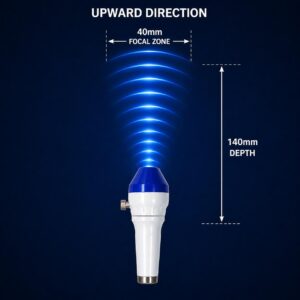

Plaque in penile shaft refers to the fibrous scar tissue buildup characteristic of Peyronie’s disease, this hardened fibrous tissue can cause pain, curvature, and even shorten the penis, significantly impacting sexual health and quality of life. This condition affects many men, but non-invasive options like shockwave therapy offer promising relief. The Medispec ED1000 shockwave therapy device targets plaque in penile shaft effectively by promoting tissue remodeling.
What is Plaque in Penile Shaft?
Plaque in penile shaft refers to the formation of scar tissue within the tunica albuginea, the elastic membrane surrounding the erectile tissue, often during the acute phase of Peyronie’s disease lasting up to 18 months. Inflammation triggers plaque formation, causing the penis to bend upward or downward depending on plaque location, with dorsal plaques being most common. Risk factors include minor trauma from intercourse or injury, leading to restricted flexibility and shortening in severe cases.
Symptoms of Plaque in Penile Shaft:
Men with plaque in penile shaft notice a hard lump or band along the penile shaft, painful erections, and visible curvature during arousal. Additional signs include indentations, erectile dysfunction in over 30% of cases, and emotional distress impacting intimacy. Without intervention, plaque in penile shaft can calcify, worsening deformity over time.
Penile curvature: This is often the most noticeable symptom, with the penis bending upwards, downwards, or to the side during an erection.
Pain: Many men experience pain during erections, especially in the early, acute phase of the disease.
Palpable lump or plaque: You may be able to feel a hardened area of tissue on the penile shaft.
Shortening of the penis: The non-elastic plaque can cause the penis to lose length.
Erectile dysfunction: The curvature and pain associated with plaque in the penile shaft can make it difficult to achieve or maintain an erection.
Causes of Plaque in Penile Shaft:
While the exact cause of Peyronie’s disease is not fully understood, it is generally believed to result from repeated micro-trauma to the penis, often during sexual activity, leading to inflammation and scar tissue formation. Genetic predisposition and certain autoimmune conditions may also play a role.
Treatment Options for Plaque in Penile Shaft
Various treatment options are available, ranging from conservative approaches to surgical intervention, depending on the severity and duration of the condition. These include oral medications, injections directly into the plaque, and surgical procedures to straighten the penis. However, a promising non-invasive treatment gaining significant attention is low-intensity extracorporeal shockwave therapy (LI-ESWT).
What is LI-ESWT?
LI-ESWT is a relatively recent technology that has been quite effective in improving ED in many men, with more recent studies showing promise especially in the treatment of plaque in penile shaft.
These studies have found the treatment to reduce penile pain and have some, if notcomplete, improvement in both penile deformity / curvature and plaque size, and to decrease the progression of the disease. It has been proven safe, and to have a high patient satisfaction rate.
How does LI-ESWT work for Plaque in Penile Shaft?
Acoustic (pressure / shock) waves are applied via an applicator head applied to the skin at and around the site of plaque formation. It has been shown that these ‘shocks’ cause micro-trauma or shear stress, to fibroses tissues (plaques) basically ‘stretching’ them with each shock applied. This stretching causes an inflammatory response, and our bodies respond by ‘remodeling’ the affected area, and in time, resorption of the fibroses tissues occurs.
As well, this shear stress causes internal micro-damage to the cells in the area. Recognizing the damage (as in, a cut to the skin), the body slowly begins to absorb the damaged cells and replaces them with new ones. At the same time, the body releases ‘growth factors’ which result in the production of new cells lining existing vessels in the area, as well as new blood vessel formation (angiogenesis).
The above also applies to atherosclerosis (hardening or narrowing due to plaque formation on the internal walls of the blood vessels). The body responds by remodeling, in a similar way, the vessels in the area, resorbing and remodeling the internal plaques of the vessels, and therefore providing for better blood flow and increased flexibility of theses vessels to expand and contract.
Therefore, for plaque in penile shaft, LI-ESWT is thought to help by:
- breaking down the plaque directly
- inducing more blood flow to the treated area (again, more oxygen and nutrients)
- creating an inflammatory reaction (via shear stress) which causes the plaque to be broken down, any calcium reabsorbed, and the waste from this process being removed by a subset of white blood cells (macrophages).
- changing the scar tissue configuration within the plaques.
- improving blood flow in the area
In summary, reduction in deformity / curvature is due to shear stress from LI-ESWT therapy stimulating plaque remodeling, followed by a resorption of the fibroses or calcified tissues. The result of this is actually softer plaque that improves or even eliminates in many cases, the extent of deformity/curvature. The treatment may also have a preventative effect on the progression of penile deformity/curvature, as well as the actual development of a calcified plaque if treated after the active phase of the disease.
Medispec ED1000 for Plaque in Penile Shaft
The Medispec ED1000 is a leading device in LI-ESWT for erectile dysfunction and Peyronie’s disease. It delivers precisely calibrated shockwaves to the penile shaft, aiming to improve blood flow and reduce plaque. Many patients have reported positive outcomes with the Medispec ED1000, experiencing a reduction in penile curvature and pain, along with improved erectile function.
Clinical studies using the Medispec ED1000, such as those detailed in reviews of low-intensity shockwave protocols, report significant improvements in plaque size, curvature reduction up to 49%, and pain relief in Peyronie’s patients.
A Medispec Study on Plaque in Penile Shaft:
Medispec, a pioneer in shockwave therapy, has been at the forefront of research in this area. A notable study investigated the efficacy of the Medispec ED1000 for Peyronie’s disease. In a study published in the Journal of Sexual Medicine, researchers evaluated the impact of LI-ESWT using the Medispec ED1000 on patients with Peyronie’s disease. The study demonstrated significant improvements in penile curvature, pain scores, and erectile function in a substantial number of participants, highlighting the potential of this technology for treating plaque in the penile shaft.
The research suggests that the mechanical forces of the shockwaves help to remodel the collagen in the plaque, leading to its breakdown and a more flexible penile shaft. This makes the Medispec ED1000 a valuable tool in the management of plaque in the penile shaft.
Is there a difference between the Medispec device and others?
Yes. Medispec (see medispec.com) re-engineered, and patented worldwide, their acoustic wave (electro hydraulic or EH wave) for the sole purpose of treating ED and PD (and PE). A recent comer to the market using EH technology has underperformed (by a lot) Medispec’s specifications according to ED Free Clinics’ analysis. Medispec technology is NOT a re purposed physiotherapy device (electro magnetic). There is a big difference in the design of the acoustic wave (more info on this is provided at consultation).
Plaque size: Studies show that treatment with LI-ESWT leads to a decrease in scar tissue (plaque size). But this may not be the only effect of the treatment. Many men are unhappy with the way their penis feels with the plaque, both erect and non erect. Decreased scar tissue positively impacts how they feel about their penis and about themselves.
Considering Your Options
If you are experiencing symptoms of plaque in penile shaft, it is essential to consult with a healthcare professional. They can provide an accurate diagnosis and discuss the most appropriate treatment plan for your individual needs. While traditional treatments exist, exploring advanced non-invasive options like shockwave therapy with the Medispec ED1000 could offer significant benefits.
Don’t let plaque in the penile shaft affect your confidence and quality of life. Consult with us and learn more about the effective treatments available.